
Best Bike Power Meters: 5 Picks for More Reliable Training Data
As an Amazon Associate I earn from qualifying purchases. Some links may earn us a commission at no extra cost to you.
A good bike power meter should deliver repeatable watt data without forcing awkward compromises in pedal systems, crank compatibility, battery life, or maintenance. Pedal-based meters are usually easier to transfer between bikes, while crank-based options make more sense when the setup will stay on one machine.
These five picks cover road riders, riders who want left/right data, crank-based setups, and Speedplay users.
Top Picks
1. Magene P715 Dual-Sensing Power Meter Pedals — Best Overall Value
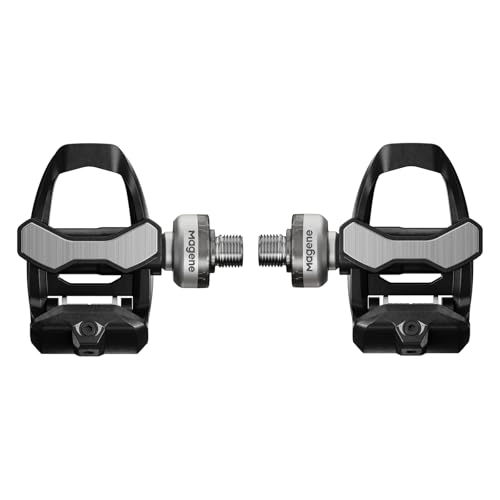
- Dual-Sensing Side Precision – Independently measure left and right leg power with ±1% accuracy, making the P715 a professional cycling power meter for serious riders
- KEO Compatibility – Works perfectly with KEO pedal systems, allowing easy upgrades without replacing your cleats. Ideal choice for any bike power meter setup
- Premium Silver Finish – The elegant silver design adds a sleek, modern look to your bike while delivering the durability expected from high-end power meter pedals
The Magene P715 offers dual-sided power measurement at a price that undercuts many established premium pedal systems.
Why it wins: The listing specifies ±1% accuracy, independent dual-sided measurement, Look KEO compatibility, Bluetooth and ANT+ connectivity, and up to 120 hours of battery life.
It is also designed for quick pedal-based installation, making it easy to move between compatible road bikes.
Pros
- Dual-sided power measurement
- Claimed ±1% accuracy
- Look KEO compatible
- Bluetooth and ANT+
- Up to 120-hour battery life
- Easy to transfer between bikes
Cons
- Requires Look KEO-compatible cleats
- Dual-sided data may be unnecessary for recreational riders
- Smaller review history than long-established competitors
Trade-offs / Who should skip
The P715 is best for road riders who want true left/right data without moving into the highest price tier.
Skip it if you use Shimano SPD-SL, Speedplay, or two-bolt MTB shoes and do not want to change cleat systems.
Scores: Performance 4.7/5 | Power Accuracy 4.8/5 | Ease of Use 4.7/5 | Value 4.9/5
2. Garmin Rally RS210 — Best Premium Shimano SPD-SL Option
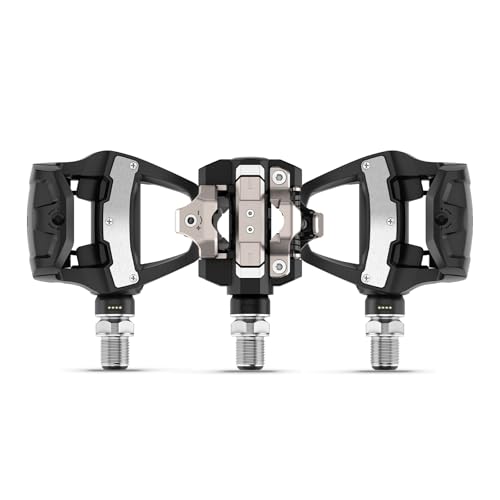
- Pedal-based power meters for road (compatible with SHIMANO SPD-SL cleats) install like any other pedals and quickly transfer between bikes; removable power sensor allows for use with Rally XC210 off-road pedal bodies
- Dual sensing for cycling dynamics data, including left/right balance, seated versus standing, platform center offset and power phase
- New strain gauge and gyroscope make these power meters highly responsive and +/- 1% accurate

The Garmin Rally RS210 is the premium pedal-based choice for riders already committed to Shimano SPD-SL road cleats.
Why it wins: It uses dual-sensing power measurement and is designed to provide advanced cycling dynamics while remaining easy to transfer between bikes.
Its rechargeable design and carbon pedal body also make it a more modern alternative to older battery-based pedal systems.
Pros
- Dual-sided measurement
- Shimano SPD-SL compatible
- Easy to transfer between bikes
- Advanced cycling dynamics
- Rechargeable
- Premium road-pedal design
Cons
- Expensive
- More data than many riders need
- Shimano SPD-SL compatibility limits it to road-oriented setups
Trade-offs / Who should skip
Choose the Rally RS210 if you already use SPD-SL shoes and want a premium dual-sided system.
Skip it if value is the priority. The Magene P715 provides dual-sided power at a substantially lower entry price, although it uses a different cleat system.
Scores: Performance 4.9/5 | Power Accuracy 4.9/5 | Ease of Use 4.8/5 | Value 3.8/5
3. GEOID PM500 Power Meter Crankset — Best Budget Crank-Based Option
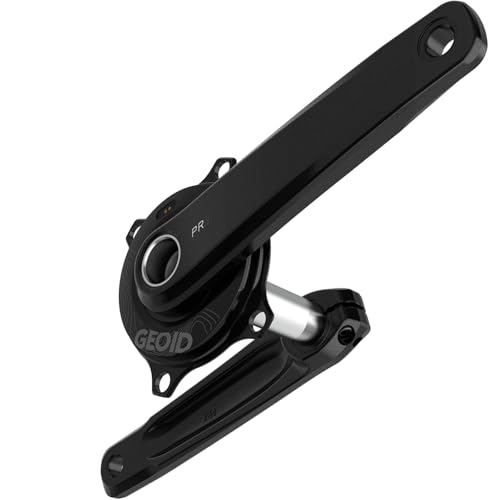
- 【±1.5% Power Accuracy for Reliable Data】With a dual-sensor fusion algorithm that integrates high-sensitivity strain gauges with an accelerometer, it monitors ambient temperature in real-time and dynamically compensates for measurement discrepancy, ensuring unwavering accuracy and stability.
- 【Lightweight 680g Aluminum Structure】The crank is forged from 6061 aluminum alloy for superior mechanics; the spider is fully CNC-machined from 7075 aluminum alloy, with an optimized structure. The total weight is 680g (170mm crank + 100g spider), delivering maximum stiffness and efficiency.
- 【300h Battery & Magnetic Charge】Ride farther without worry. The intelligent power management system delivers up to 300 hours of use per charge, while the magnetic snap-on charger ensures effortless, secure recharging anytime.
The GEOID PM500 is the most affordable crank-based power meter in this group and is a strong alternative for riders who do not want electronics in their pedals.
Why it wins: The 170mm crankset is rated for ±1.5% accuracy and includes Bluetooth and ANT+ connectivity, IPX7 water resistance, and a claimed battery life of up to 300 hours.
At a listed weight of 680 grams, it combines the power meter and crankset into one complete road-oriented package.
Pros
- Claimed ±1.5% accuracy
- Up to 300-hour battery life
- Bluetooth and ANT+
- IPX7 water resistance
- 110 BCD
- Lower cost than most premium power meters
Cons
- Crank compatibility needs careful checking
- Harder to transfer between bikes than pedals
- Specific 170mm crank length may not suit every rider
Trade-offs / Who should skip
The PM500 is a strong choice if the power meter will remain on one road bike and you want to keep your current pedals.
Skip it if you regularly switch one power meter between several bikes or need a different crank standard or crank length.
Scores: Performance 4.4/5 | Power Accuracy 4.4/5 | Ease of Use 4.0/5 | Value 4.8/5
4. SRAM Rival AXS Power Meter Crank and Spindle — Best for SRAM AXS Riders
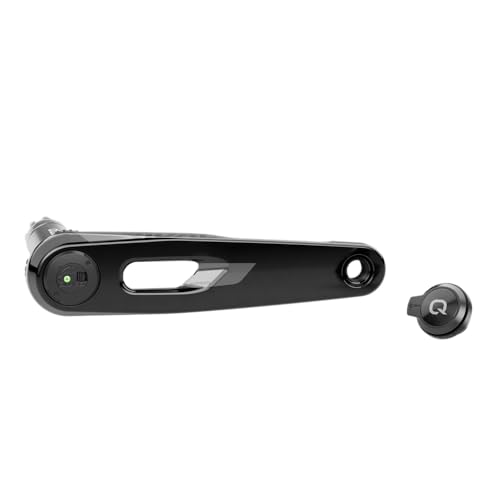
- Rival AXS wide aluminum left crank arm with power meter spindle
- Constructed from lightweight, durable aluminum with a sleek black finish, this crank arm combines strength and style for road cycling enthusiasts.
- Featuring a spindle-based power meter integrated within the DUB spindle, it accurately measures left-leg power and calculates total watts, enhancing training intelligence and performance monitoring.
The SRAM Rival AXS power meter is the most logical choice for riders already building around a compatible SRAM DUB and AXS drivetrain.
Why it wins: This assembly integrates the power meter into the crank and spindle rather than requiring power-meter pedals.
The listed version uses a 160mm left crank arm and DUB power-meter spindle and is intended for compatible 12- and 13-speed SRAM setups.
Pros
- Integrated crank-based design
- Keeps your preferred pedals
- Designed for SRAM AXS drivetrains
- DUB spindle system
- Clean permanent installation
Cons
- Much more drivetrain-specific than pedal meters
- 160mm crank length will not suit every rider
- Compatibility must be checked carefully before ordering
Trade-offs / Who should skip
This is best for a rider already using compatible SRAM equipment and planning to leave the power meter on one bike.
Skip it if you use Shimano cranks, regularly swap power measurement between bikes, or need a different crank length.
Scores: Performance 4.5/5 | Power Accuracy 4.5/5 | Ease of Use 3.9/5 | Value 4.5/5
5. Wahoo POWRLINK ZERO Dual — Best for Speedplay Fit Adjustment
The Wahoo POWRLINK ZERO Dual remains the best fit for riders who prefer the Speedplay pedal platform.
Why it wins: The dual-sided system measures power from both pedals and is rated to ±1% accuracy. Its Speedplay platform also provides unusually broad cleat-position and float adjustment compared with conventional three-bolt road pedals.
Battery life is rated at up to 75 hours, and the pedals support both ANT+ and Bluetooth connectivity.
Pros
- True dual-sided measurement
- Claimed ±1% accuracy
- Speedplay pedal platform
- Extensive cleat-position adjustment
- ANT+ and Bluetooth
- Rechargeable battery
- Up to 75-hour battery life
Cons
- Requires Speedplay cleats
- More expensive than many pedal-based competitors
- Shorter battery life than some newer alternatives
Trade-offs / Who should skip
The POWRLINK ZERO Dual makes the most sense for riders who already prefer Speedplay or need its unusually flexible cleat positioning.
Skip it if you want Shimano SPD-SL or Look KEO compatibility without changing shoes or cleats.
Scores: Performance 4.7/5 | Power Accuracy 4.8/5 | Ease of Use 4.6/5 | Value 4.0/5
Quick Compare
- Best overall value: Magene P715
- Best Shimano SPD-SL option: Garmin Rally RS210
- Best budget crank-based meter: GEOID PM500
- Best for SRAM AXS: SRAM Rival AXS Power Meter
- Best for Speedplay riders: Wahoo POWRLINK ZERO Dual
- Best for transferring between bikes: Magene P715 or Garmin Rally RS210
- Best permanent installation: GEOID PM500 or SRAM Rival AXS
- Best fit-adjustability: Wahoo POWRLINK ZERO Dual
Pedal-Based vs Crank-Based Power Meters
Pedal power meters are usually the easiest option when you own several bikes.
Installation is similar to replacing ordinary pedals, and moving the meter to another compatible bike is relatively straightforward.
Crank-based systems are more drivetrain-specific but allow you to keep your preferred pedals. They can be a better solution when the meter will stay permanently installed on one bike.
Single-Sided vs Dual-Sided Measurement
A single-sided power meter measures one leg and estimates total power by doubling that reading.
That approach is usually sufficient for structured training, but it assumes both legs contribute equally.
Dual-sided systems such as the Magene P715, Garmin Rally RS210, and Wahoo POWRLINK ZERO Dual measure both sides independently. That can reveal left/right balance differences and provide more detailed training data.
Cleat Compatibility Matters
Power-meter pedals lock you into a specific pedal and cleat ecosystem.
The Magene P715 uses a Look KEO-compatible interface, while the Garmin Rally RS210 is designed for Shimano SPD-SL users.
The Wahoo POWRLINK ZERO uses the Speedplay platform.
Choose the cleat system first unless you are comfortable changing shoes, cleats, or bike fit.
Battery Life
Long battery life matters more for riders who train frequently or travel with their bikes.
The Magene P715 is rated for up to 120 hours, while the GEOID PM500 claims up to 300 hours.
The Wahoo POWRLINK ZERO Dual is rated for roughly 75 hours between charges.
Accuracy
Most serious modern power meters aim for an accuracy claim around ±1% to ±2%.
That difference is generally small enough for structured training as long as the meter is consistent from ride to ride.
For most cyclists, reliable repeatability is more important than chasing tiny differences between two high-quality meters.
Final Verdict
The Magene P715 is the strongest overall value because it combines dual-sided measurement, ±1% claimed accuracy, long battery life, and easy pedal-based installation.
The Garmin Rally RS210 is the premium option for Shimano SPD-SL users, while the Wahoo POWRLINK ZERO Dual remains the better fit for riders committed to Speedplay.
If you prefer crank-based measurement, the GEOID PM500 offers strong value and long battery life, while the SRAM Rival AXS Power Meter is the cleaner choice for compatible SRAM drivetrains.
As an Amazon Associate, I earn from qualifying purchases.